
By Michael Dakkak, DO
Dr. Dakkak is a fellowship-trained sports medicine physician practicing at Cleveland Clinic Weston Hospital in Florida. He specializes in non-surgical treatment options for treating orthopedic injuries or chronic pain.
Plantar fasciopathy, often referred to as plantar fasciitis, is one of the most frequent causes of chronic heel pain, often affecting about 10% of the general population at some point in their lifetime. It can lead to significant discomfort, interfering with daily activities, such as walking, exercising, and even standing for prolonged periods. Without timely diagnosis and effective treatment targeted to the underlying source of pain, many patients live with the chronic condition much longer than necessary.
Fortunately, modern minimally invasive techniques allow physicians to treat plantar fasciopathy with precision, often sparing patients the pain and the prolonged recovery of traditional surgical approaches.
One such technique is an ultrasound-guided minimally invasive procedure with the TenJet device. This outpatient procedure requires a very small incision to selectively resect the diseased degenerative fascia tissue that is the source of pain, leaving the healthy tissue intact..
What is Plantar Fasciopathy?
Plantar fasciopathy is a degenerative condition of the plantar fascia, the thick band of tissue that runs along the bottom of the foot from the heel to the toes. While historically referred to as “plantar fasciitis,” which implies inflammation, research shows that most chronic cases involve tissue degeneration (fasciosis) rather than active inflammation.
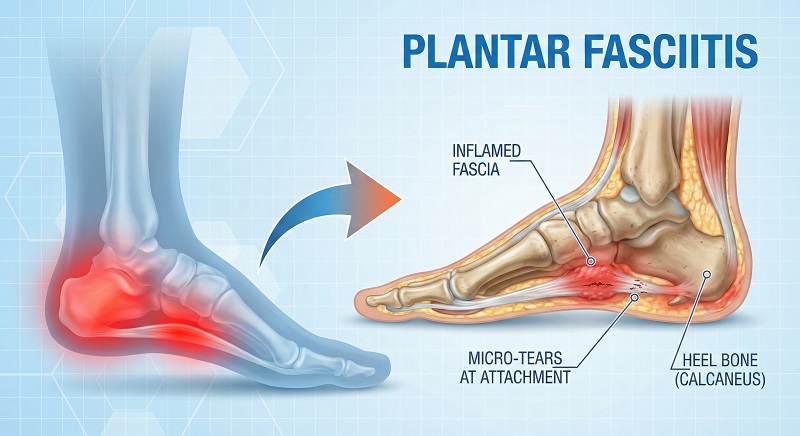
Patients may hear different terms related to plantar fascia pain, including:
- Plantar fasciitis – indicating presence of inflammation in the tissue
- Plantar fasciosis – indicating degeneration and possibly microtears in the tissue structure
Regardless of terminology, the condition often results in persistent heel pain and stiffness that worsens with activity.
Common Symptoms of Plantar Fasciopathy
 Patients with plantar fascia pain often describe:
- Sharp heel pain with the first steps in the morning (“first-step pain”)
- Discomfort after prolonged sitting, standing, or walking
- Pain worsening after exercise or long periods on their feet
- Tenderness at the base of the heel
The condition can limit physical activity, interfere with work, and even affect sleep due to lingering pain.
Who is at Risk?
Plantar fasciopathy affects a wide range of people. Risk factors include:
- Athletic or high-demand activities – such as running, jumping, and dancing
- Age over 40 – as tissue elasticity decreases with age
- High or low foot arches – resulting in increased stress on the plantar fascia due to abnormal biomechanics
- Obesity or recent weight gain – increases pressure or strain on the heel
- Jobs that require long periods on their feet – such as in health care, education, warehouse, restaurant, or construction work
Causes of Plantar Fasciopathy
Plantar fascia problems arise when repetitive stress weakens the tissue’s ability to absorb impact. Common causes include:
- Overuse from running, jumping, or long hours on hard surfaces
- Sudden increases in physical activity
- Poor footwear with inadequate support
- Biomechanical issues such as flat feet, high arches, or tight calf muscles
- Degenerative changes due to aging
How is Plantar Fasciopathy Diagnosed?
Generally, overuse of the tendon or muscle without sufficient rest can lead to a repetitive strain injury. If left untreated, this can lead to damage and degeneration (or breakdown) of tendon tissue, which can result in buildup of fluid or calcific deposits and cause discomfort.
When the elbow tendon has experienced tendon fiber breakdown and buildup of diseased tissue, the typical treatments for tendinitis (inflammation of the tendon tissue) may not be effective. At this stage, resection of diseased tissue combined with physical therapy may be the best treatment for allowing tendons to truly heal and recover.
Treatments for Plantar Fasciitis
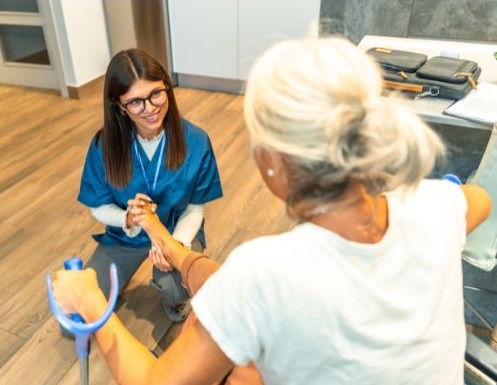 Treatments for Plantar Fasciitis traditionally include the following options. While they may be effective for the inflammatory condition, they often do not address pain resulting from degenerative changes of the fascia seen in plantar fasciosis:
- Rest, ice, and stretching – are first-line conservative measures
- Orthotics – to provide arch support and offload strain on the fascia
- Physical therapy – to address biomechanics through targeted stretching and strengthening
- Corticosteroid injections – to address inflammation or provide temporary symptom relief, but not without risks including fat pad atrophy
- Shockwave therapy, platelet-rich plasma (PRP) – aimed at stimulating blood flow to promote healing
- Surgical plantar fascia release – reserved for severe cases, often with lengthy recovery
How Does TenJet Treat Plantar Fasciopathy?
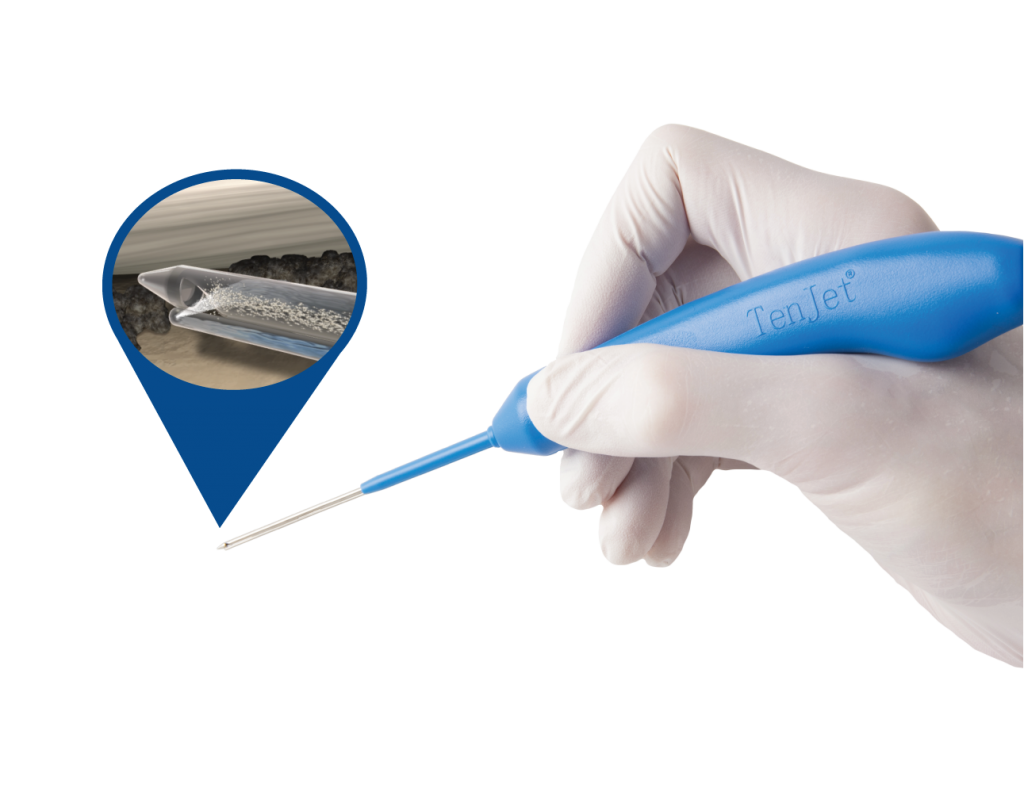 TenJet’s patented product design is distinct from any other needle-based product that physicians may use. The TenJet device uses a dual-lumen needle to deliver a high-velocity saline jet, at about 14,000 pounds per square inch (psi), to resect and remove damaged, degenerative fascia tissue while sparing healthy tissue.
During the procedure, a physician uses continuous ultrasound image guidance to visualize the diseased tissue, and the TenJet device to perform resection of the damaged, degenerative tissue.
Key benefits include:
- Performed in an outpatient setting under local anesthesia or light conscious sedation
- No large incisions or sutures required
- Shorter recovery time compared to traditional surgery
- Targeted removal of diseased tissue with minimal disruption to adjacent healthy tissue
Dr. Jason Genin and Dr. Vikas Patel of the Cleveland Clinic discuss the treatment in this article: Hydroresection Relieves Refractory Plantar Fasciitis Without Release Surgery
This short video, “TenJet Plantar Fasciitis Surgical Technique,” by Dr. Christopher Varacallo of Penn Highlands Healthcare presents the procedure in more detail. Dr. Varacallo notes that TenJet has been “a game-changer for my practice, allowing patients faster recovery time and return to activity.”
Additional videos on procedures at available on YouTube.
Recovery and Rehabilitation
Most patients resume light activity within two weeks, progressing gradually under physician guidance. A tailored physical therapy program focuses on stretching, strengthening, and restoring proper biomechanics.
Patients are typically advised to avoid walking barefoot, maintain proper footwear, and follow home exercise regimens to support healing.
Many patients report faster recovery, less downtime, and longer-lasting relief compared to traditional treatments.
This case report is a clinical example of one patient’s experience.
Case Report
A 47-year-old male presented with more than one year of left plantar heel pain, reporting a pain intensity of 7 out of 10. Symptoms were most severe with the first steps in the morning and improved as the day progressed; however, pain significantly limited participation in recreational sports within the first ten minutes of activity. The patient had previously undergone multiple corticosteroid injections, which provided only intermittent relief. Musculoskeletal ultrasound evaluation revealed plantar fasciosis with a partial tear of the medial band of the plantar fascia.
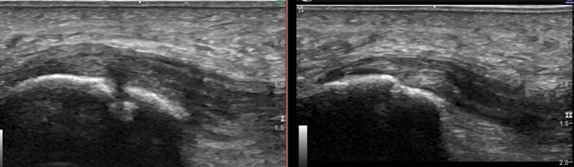 Musculoskeletal ultrasound showing plantar fasciosis prior to TenJet treatment (left) and interval tissue healing six weeks after the procedure (right).
The patient underwent a minimally invasive plantar fasciectomy using the TenJet system. At the two-week follow-up, pain had decreased to 3 out of 10. By six weeks post-procedure, the patient reported complete resolution of pain. Repeat ultrasound imaging demonstrated improvement in the medial band fasciosis, along with tissue healing at the site of the prior partial tear. The patient was cleared to resume normal activities without restrictions and remains pain free.
TenJet Patient Story
 “I developed plantar fasciitis in both feet due to my old job,” said patient Emilie. “The pain was severe enough that I very literally quit the job without having another lined up.”
After Dr. Vikas Patel of the Cleveland Clinic treated her with TenJet, Emilie said, “I am very literally pain free now.”
“Being in pain all the time really takes a toll on your mental health and energy—I didn’t know how much it was weighing on me until all the pain was suddenly gone.”
“I preach to anyone who will listen that they need to just go to a doctor who’s been trained on TenJet.”
Note: Individual results may vary.
Read more patient stories and find a TenJet physician near you.
Don’t Let Heel Pain Hold You Back
Living with chronic plantar fascia pain is not necessary. With advancements such as TenJet, patients no longer have to cycle through multiple conservative treatments or undergo invasive surgery.
By choosing a minimally invasive, ultrasound-guided treatment, patients may experience relief from heel pain, with reduced downtime, and return to the activities they love.